Water-immersion ultrasonic scanning for forgings, castings, and irregular workpieces—supporting routine A-scan and automated C-scan flaw detection.
Built for inspection, experimentation, and testing, the architecture pairs five-axis motion with conformal surface following for high-accuracy scans of complex outer geometries. Scan imagery supports analysis, quality assessment, and instructional use.
Overview
[01]
Designed for complex-part inspection, experiments, and test labs
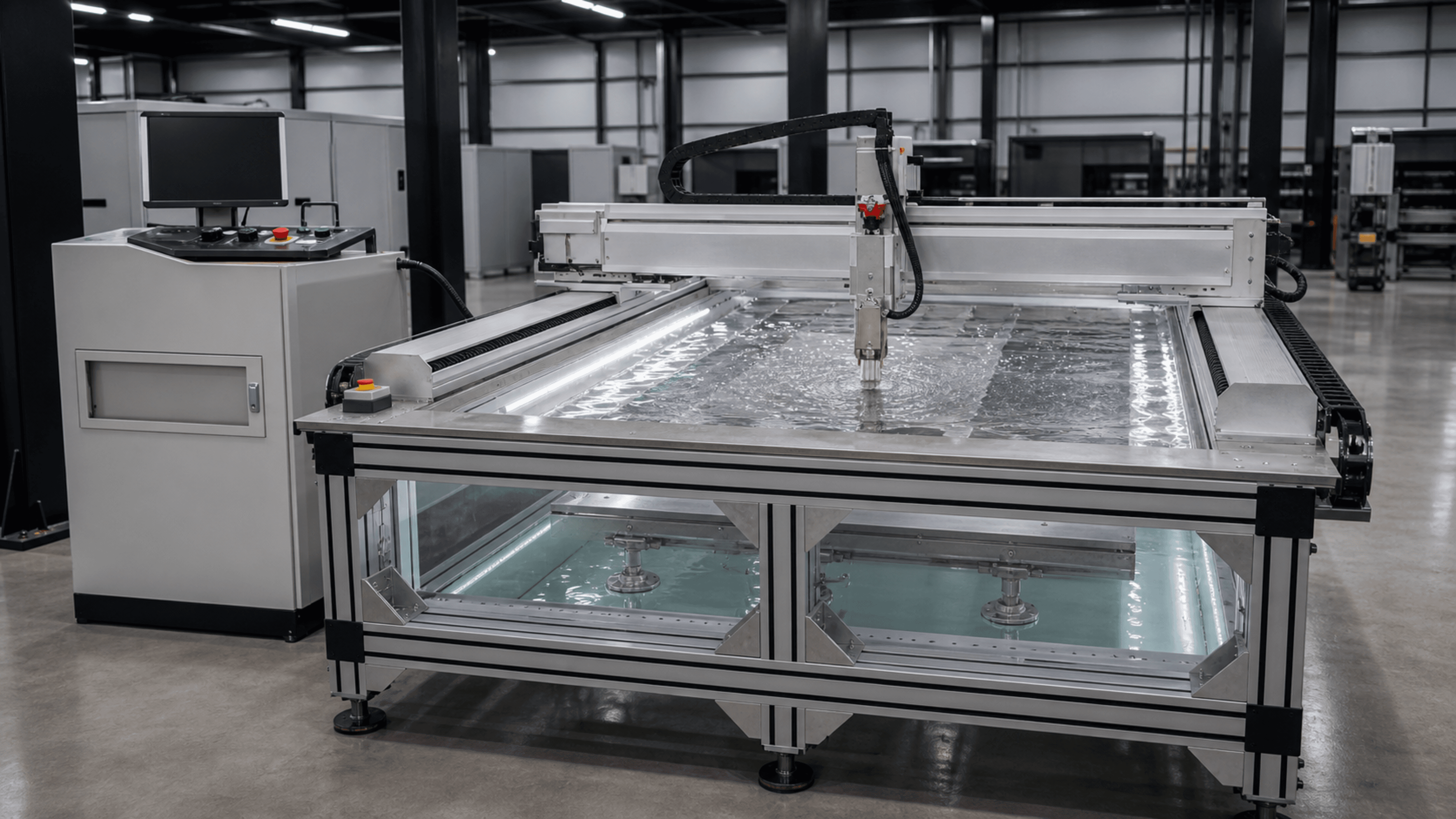
This line is a C-scanning immersion platform, model SUT-310PH, aimed at forgings, castings, and geometrically irregular parts under water coupling. It balances conventional A-scan workflows with automated C-scan campaigns for production QA, R&D benches, and structured test programmes.
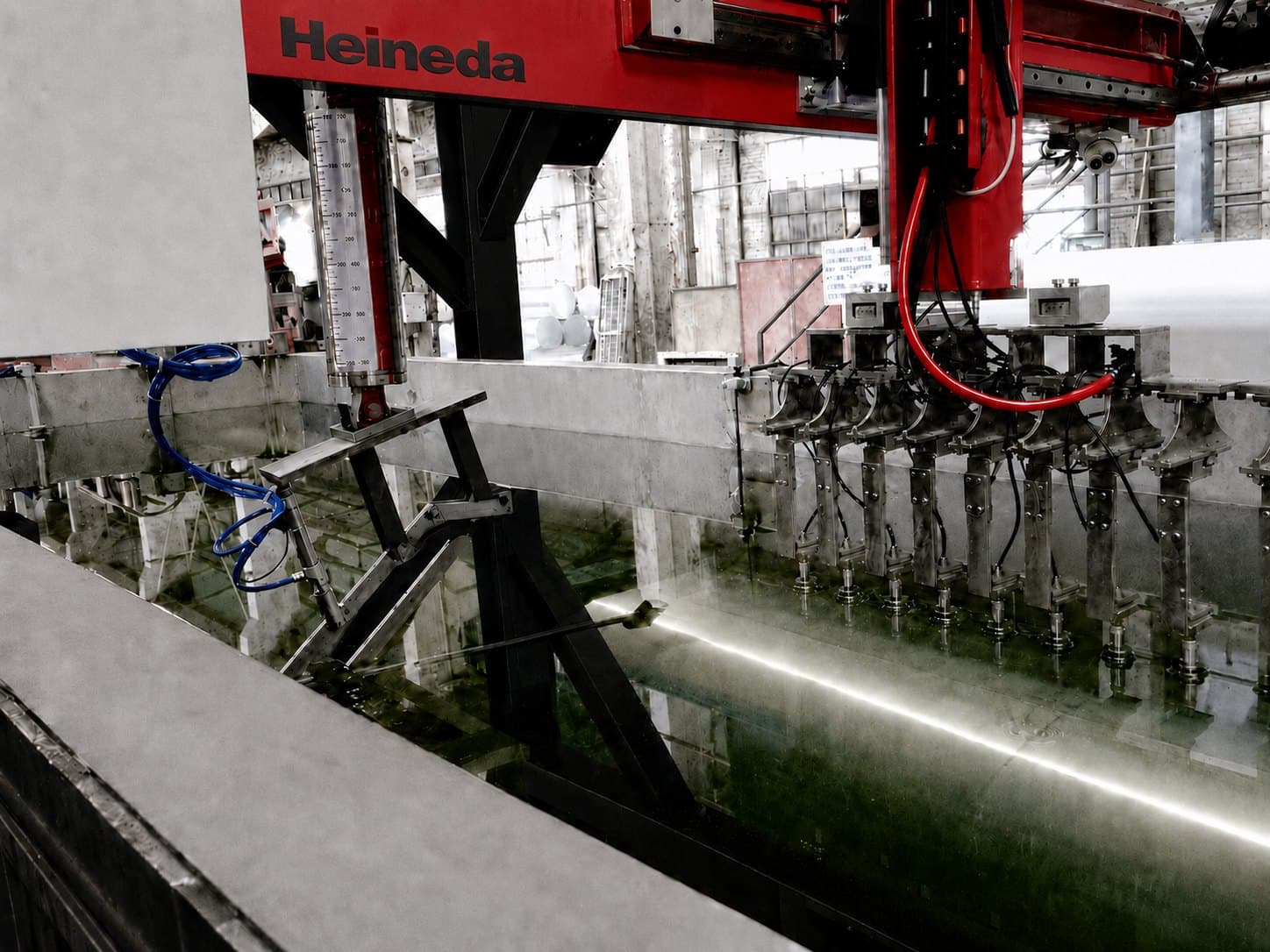
A high-stiffness aluminium extrusion frame forms the tank skeleton; transparent, impact-resistant tank walls give operators a clear view of probe motion and the part under test. The layout emphasises operability, visual monitoring, and laboratory-friendly adaptation.
Five-axis control plus conformal path planning enables precise coverage across varying sculptured surfaces. Results export as scan maps for interpretation so teams can judge internal quality and anomaly distribution with traceable imagery.
Where it applies
[02]
Complex parts in inspection, experiment, and test settings
Targets water-immersion UT for irregular outer geometries across production scanning, method validation, and instructional demonstration.
- Forging inspection
- Casting inspection
- Irregular-part inspection
- Laboratory testing
- University teaching labs
- Process testing and validation
Typical parts include hammer forgings, cast blanks, and other complex irregular workpieces. Published envelopes reference about Φ ≤ 600 mm with thickness under 300 mm for applicable families.
Key strengths
Core strengths
01
Covers forged and cast families within about Φ ≤ 600 mm and thickness < 300 mm, suited to irregular outer envelopes that need rastered or conformal coverage.
02
Supports both routine A-scan appraisals and automated C-scan flaw-mapping so campaigns can switch with the task—production, experiment, or method study.
03
Five-axis kinematics synchronized with conformal surface following delivers repeatable trajectories on sculpted forgings and cast skins.
04
Beyond mill-floor testing, the platform fits experimental validation, process proving, and university or institute training on immersion UT, scanning, and complex-part workflows.
Key capabilities for complex-part ultrasonic scanning
Automated C-scan
Automated C-scan inspection
Programmed surface scanning with automated flaw mapping and imagery suitable for complex area coverage and reporting.
Deployment patterns
System approaches for different operating modes
01 / 03
Standalone station for single-piece or small-batch scanning with time for analysis, archival, and disposition without upstream line constraints.
02 / 03
Supports method trials, recipe proving, and process experiments where the emphasis is flexible programming rather than line takt.
03 / 03
Fits institutes teaching immersion UT fundamentals, scanning mechanics, and how complex parts move through a documented inspection sequence.
Brochure material does not subdivide further catalogue tiers; in practice the same architecture adapts to production, experiment, and teaching when configured to the brief.
C-Scanning System
Models & specs
SUT-310PH: immersion UT for forgings, castings, and contour parts within about Ø600 mm by 300 mm thickness—five-axis paths and conformal coverage for lab or shop QA.
| Parameter | SUT-310PH |
|---|---|
| Part size | Dia < 600 mm, L < 600 mm, T < 300 mm |
| Modes | A-scan + C-scan |
| Positioning | < 0.02 mm (stated) |
| Gantry | XYZ (five-axis capable) |
| Typical use | Forging QA, precision castings |
Operational sequence
Typical complex-part immersion workflow
Step 01 / 05
Prepare and load the part
Complete preparation for the alloy and geometry, then fixture the workpiece inside the submerged inspection volume.
Step 02 / 05
Choose modality and path
Select A-scan or C-scan objectives from the outer contour, then compile the scan path or recipe for that surface.
Step 03 / 05
Immersed automatic scan
Under water coupling, five-axis motion executes the programmed traverse while acquisition runs continuously.
Step 04 / 05
Conformal surface pass
Conformal logic keeps coverage tight on irregular skins so beam paths stay meaningful across curvature and steps.
Step 05 / 05
Interpret imagery
Exported C-scan (and companion) views feed reviewers who judge quality indicators and defect distribution against the specification.
Configuration latitude
[Custom]
Extending the platform for the inspection brief
The architecture scales with part envelope, inspection objective, and site role. Complex one-offs, experimental coupons, and project-based campaigns can remap tank layout, scan style, and operator workflow so the machine tracks real duty cycles instead of a frozen catalogue sketch.
- Tune scan paths and kinematics to outer-curvature and access constraints
- Resize the working envelope for stated diameter and thickness bands
- Emphasise A-scan or C-scan personalities per programme requirements
- Layer conformal strategies when sculpted surfaces dominate the risk map
- Extend benches toward dedicated validation or qualification rigs
- Adapt viewing panels, lighting, and guarding for classroom walk-throughs
- Reconfigure tank partitions or sight glass for field sight lines
- Engineer non-standard immersion layouts when a turnkey skid is insufficient
Common client questions
Which parts does the system cover?
Hammer forgings, castings, and irregular complex parts are in scope. Published guidance cites about Φ ≤ 600 mm with thickness under 300 mm for applicable workpiece families.
Is the equipment only for production lines?
It is usually configured from the part risk profile, inspection objective, and operating context. Besides production QC it fits experimentation, acceptance testing, and structured teaching.
Which ultrasonic modes are supported?
Specifications call out conventional A-scan operation together with automated C-scan flaw-detection campaigns; teams pick per task.
What are the headline technical capabilities?
Five-axis motion, conformal surface following, water-immersion mechanical design, and scan-imagery analysis are the backbone capabilities.
How are results evaluated?
Scan imagery—especially C-scan composites—supports comparative analysis so reviewers can study internal indications and spatial distribution.
What information accelerates an accurate quote?
Expect to share alloy family, outer envelope, thickness span, flaw criteria, production versus lab context, and whether instruction or R&D workloads matter so the proposal matches electromechanical scope.
Ready to integrate?
Request a custom quote