Tube & bar
Automated ultrasonic inspection for small and medium tubes, bars, and selected thin-wall tubulars. Configure longitudinal and transverse detection, or combine ultrasound with eddy current.
Systems cover diverse diameter, length, and wall-thickness ranges. Coupling options include local immersion, semi-immersion, or water film. Layouts support standalone UT, combined UT and EC, segmented inspection, automated load and unload, and marking integration.
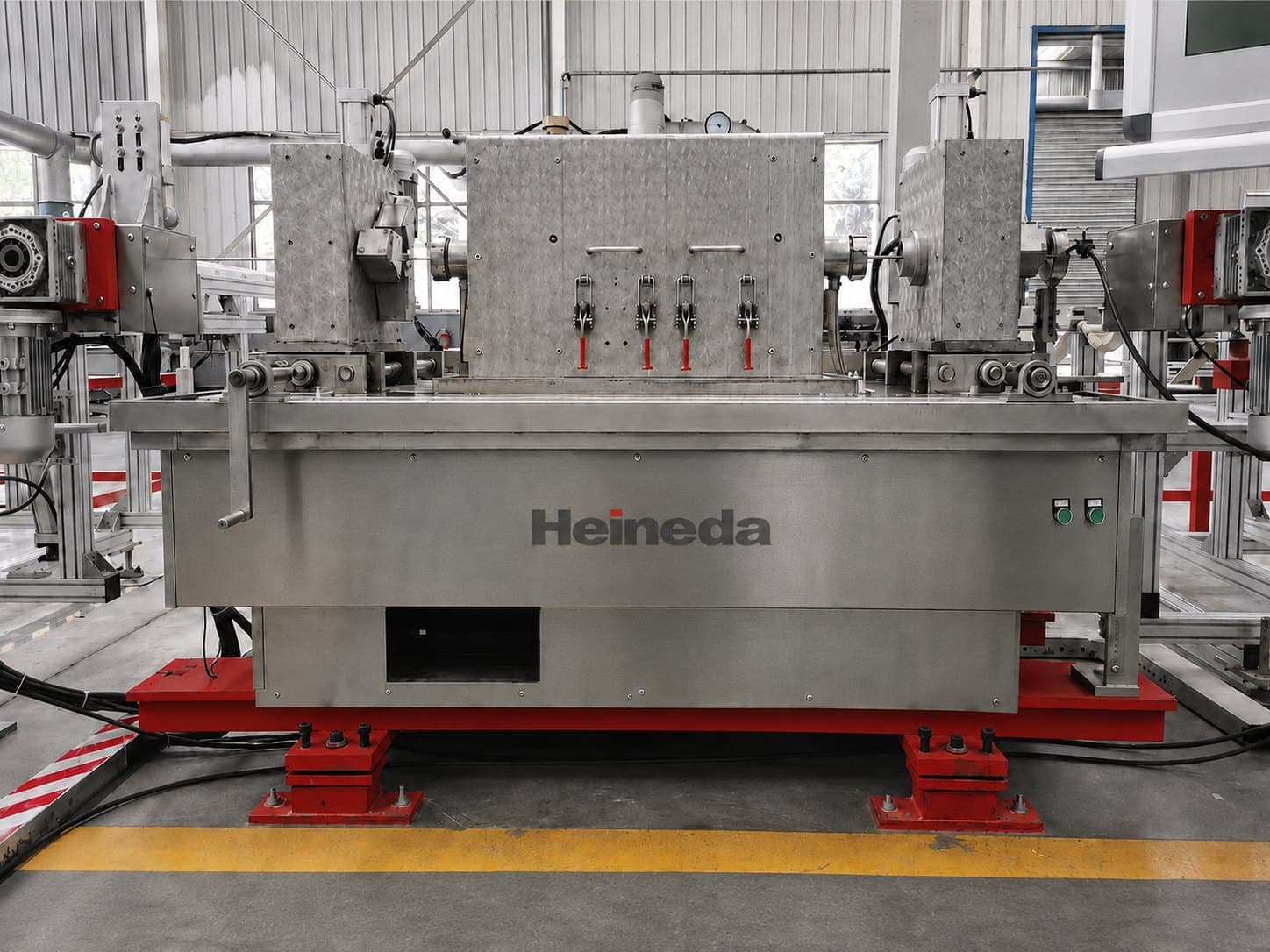
Overview
[01]
Automated inspection equipment for small and medium tube and bar quality control
This family is built for automated flaw detection on small and medium metal tubes and bars. Typical parts include small-diameter thin-wall tubes, short tubes in the small-to-medium range, bar stock, and selected heavy-wall pipe. Depending on model and mechanical scheme, systems run online or offline with local immersion, semi-immersion, or water-film coupling.
Detection strategies are configuration-driven: longitudinal and transverse ultrasound, and on some models eddy current—run independently or together. Mechanics include rotating probe feed, rotating workpiece with linear probe traverse, and spiral feed paths suited to each part condition.
System composition can combine conveying, straightening and guiding, coupling hardware, probe adjustment, buffer storage, and marking to match part envelope, takt time, and automation depth.
Industries & use cases
[02]
Suitable for many small and medium metal tube and bar inspection scenarios
The line serves automated flaw-detection needs for small and medium tubes, bars, short tubes, thin-wall or selected thick-wall workpieces—where repeatability, cycle discipline, and line integration matter.
- Aerospace
- Metallurgy
- Pressure vessels
- Nuclear power
- Metal materials processing
- Tube and bar manufacturing
Applicable workpieces include small-diameter thin-wall tubes, short tubes, bars, small-to-medium tube and bar stock, and selected heavy-wall pipe. Diameter, length, and wall-thickness envelopes vary by model—match parameters to the datasheet for each build.
Core value
01
From thin-wall tubes toward selected medium and heavy-wall pipe, models bracket diameter, length, and wall thickness so many tube and bar classes can be inspected.
02
Configure longitudinal and transverse ultrasound; selected models add eddy current for independent runs or fused acquisition.
03
Choose local immersion, semi-immersion, or water-film coupling, paired with rotating head feed, rotating part with linear probe motion, or spiral feed as the process demands.
04
Share load and unload buffers and markers where the design allows; add conveying, guiding, encoders, pressure wheels, and segmented inspection for a complete cell.
Key functions around tube and bar inspection
UT & EC
Ultrasound and eddy current alone or together
On combined models, run ultrasonic inspection, eddy current, or both concurrently for more complete material quality coverage.
System types
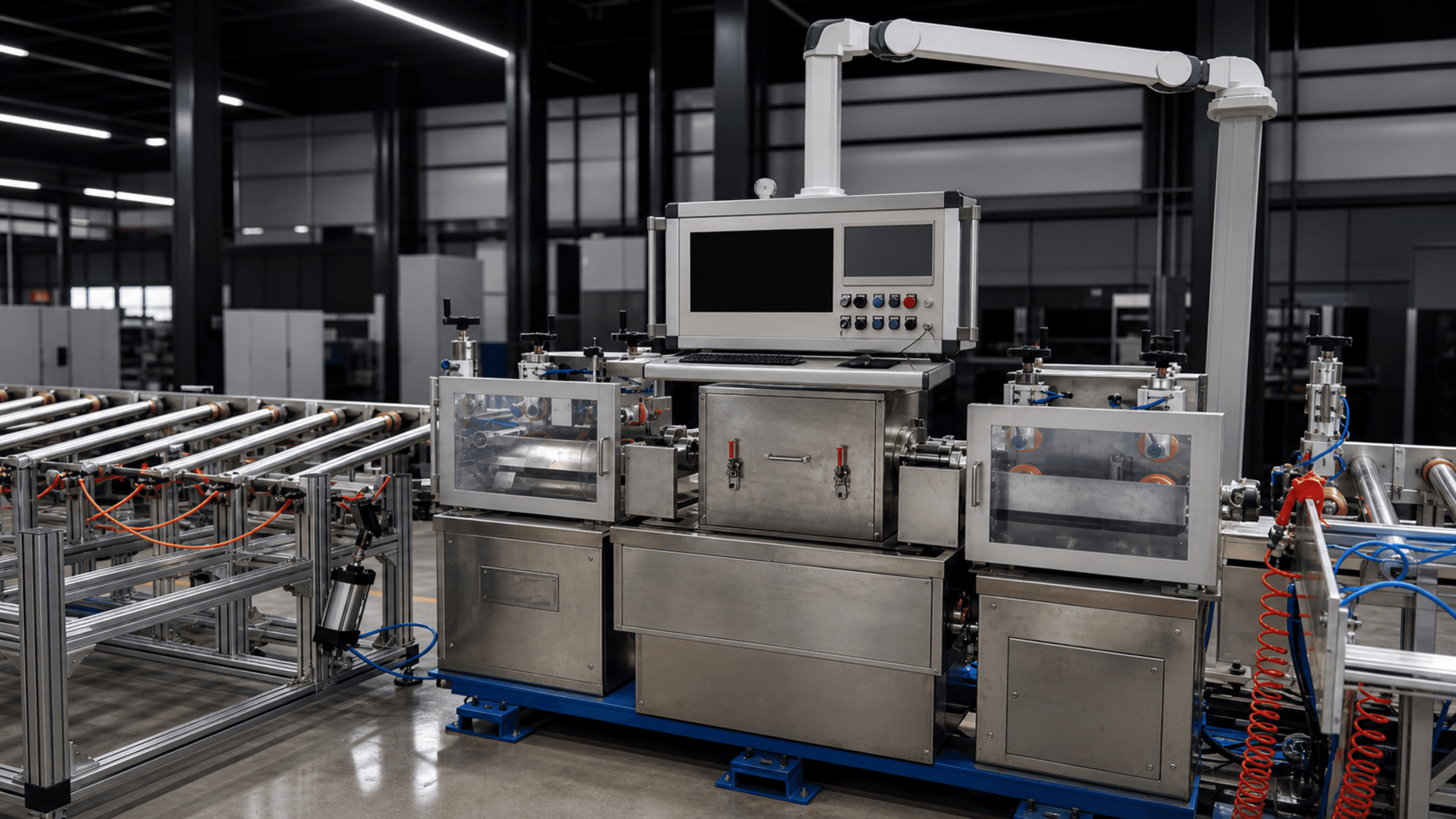
System options for different parts and processes
01 / 03
Suited to small-diameter thin-wall tubes and bars. Configure dual-axis ultrasound with differential through-type eddy-current coils; run UT, EC, or both; integrate handling and marking for a fuller cell.
02 / 03
For small and medium tubes and bars including selected heavy-wall pipe. Avoids large tanks and saves floor space; rotary speed, scan speed, and spiral feed complete coverage; scale coupling stations and segmentation to need.
03 / 03
For short tubes and small-to-medium tubes and bars: rotating workpiece with linear probe feed—compact, straightforward operation, and fast scan motion.
The family is not one fixed machine: implementations differ by part size, coupling style, and motion pattern so each job can be configured to the workpiece and test plan.
System configurations
Models
Representative models across diameter, method, and coupling—confirm final ranges with project-specific quoting.
| Parameter | SUT-310ZTX1-40 | SUT-310T1F-180 | SUT-310T2B | SUT-310R1D-254 |
|---|---|---|---|---|
| Diameter | 4 - 180 mm | 4 - 180 mm | 68 - 72 mm | 20 - 230 mm (two ranges) |
| Length | > 1,500 mm | > 1,500 mm | 170 - 1,000 mm | > 2,500 mm |
| Method | Eddy current + ultrasonic | Ultrasonic only | Workpiece rotates, probe advances | — |
| Speed | 1 - 20 m/min | 1 - 20 m/min | — | 1 - 3 m/min |
| Head | Rotating, up to 3,000 rpm | — | — | — |
| Coupling | — | Local water immersion | Water film | — |
| Best for | — | — | Fixed-diameter short billets | — |
| Channels | — | — | — | 8 CH (customisable) |
| Feature | — | — | — | Wall thickness + L/T wave |
Inspection flow
Typical detection sequence
Step 01 / 05
Infeed and guiding
Tubes or bars enter conveying and guiding—storage, transfer, centering, or pressure wheels establish stable motion into the main test span.
Step 02 / 05
Centering and coupling setup
Per model, three-roll centers, probe hardware, and coupling units set relative position and medium—concentricity, water path, and incidence-related adjustments.
Step 03 / 05
Establish scan motion
The mechanism starts the programmed motion: rotating head feed, rotating part with linear probe traverse, or spiral feed so the surface follows the planned scan path.
Step 04 / 05
Execute UT or combined test
Longitudinal and transverse ultrasound runs, optionally with eddy current. Segmented coupling layouts shorten cycle where the design allows.
Step 05 / 05
Output and downstream handling
After the test, marking, buffering, or downstream conveying completes the automated inspection loop.
Configuration scope
[Custom]
Configurable around the part and process
Across models, flexibility shows up in detection principle, coupling, motion, channel count, part envelope, and auxiliaries. Projects can tune configuration to the part, acceptance criteria, and hand-off to upstream and downstream equipment.
- Pick a scheme for tubes, bars, short tubes, thin-wall, or selected thick-wall service
- Match diameter, length, and wall-thickness brackets to the datasheet
- Choose longitudinal, transverse, or combined UT as the defect set requires
- Select UT only, EC only, or UT with EC where applicable
- Choose local immersion, semi-immersion, or water-film coupling for the floor and part
- Align mechanics to rotating head feed, rotating part, or spiral feed
- Scale channels, segmentation, and coupling station count to takt time
- Add conveying, storage, marking, and interfaces to neighboring line equipment
Frequently asked questions
Which workpieces does this system mainly cover?
Small and medium tubes and bars, small-diameter thin-wall tubes, short tubes in the small-to-medium range, and selected heavy-wall pipe. Confirm each model’s diameter, length, and wall-thickness limits before ordering.
Is inspection limited to ultrasound?
No. Some models include eddy current—run UT alone, EC alone, or combined. Others are ultrasound-centric.
What coupling methods are used?
Depends on model: local immersion, semi-immersion, or water film. Pick based on part geometry and mechanical layout.
Can channel count be adjusted to the job?
Yes. Examples include 4 / 6 / 8-channel options; some builds standardize on eight channels and allow custom channel plans.
Can the machine tie into loading and marking equipment?
Yes. Buffers, load and unload, and marking can be shared or integrated with conveying and centering to form a full cell.
What do you need before quote or model selection?
At minimum: part type, outside diameter range, length range, wall thickness range, need for longitudinal or transverse UT, need for combined UT and EC, and any requirement to link load, unload, marking, or other line equipment.
Ready to integrate?
Request a custom quote