Automated immersion ultrasonic flaw detection for metal round bars, supporting offline inspection and production-line integration.
Designed for round bars and rods across diameters and lengths—high-throughput automated inspection, stable scanning, real-time data recording, and configuration tailored to each project.
Overview
[01]
Engineered for dependable round-bar inspection
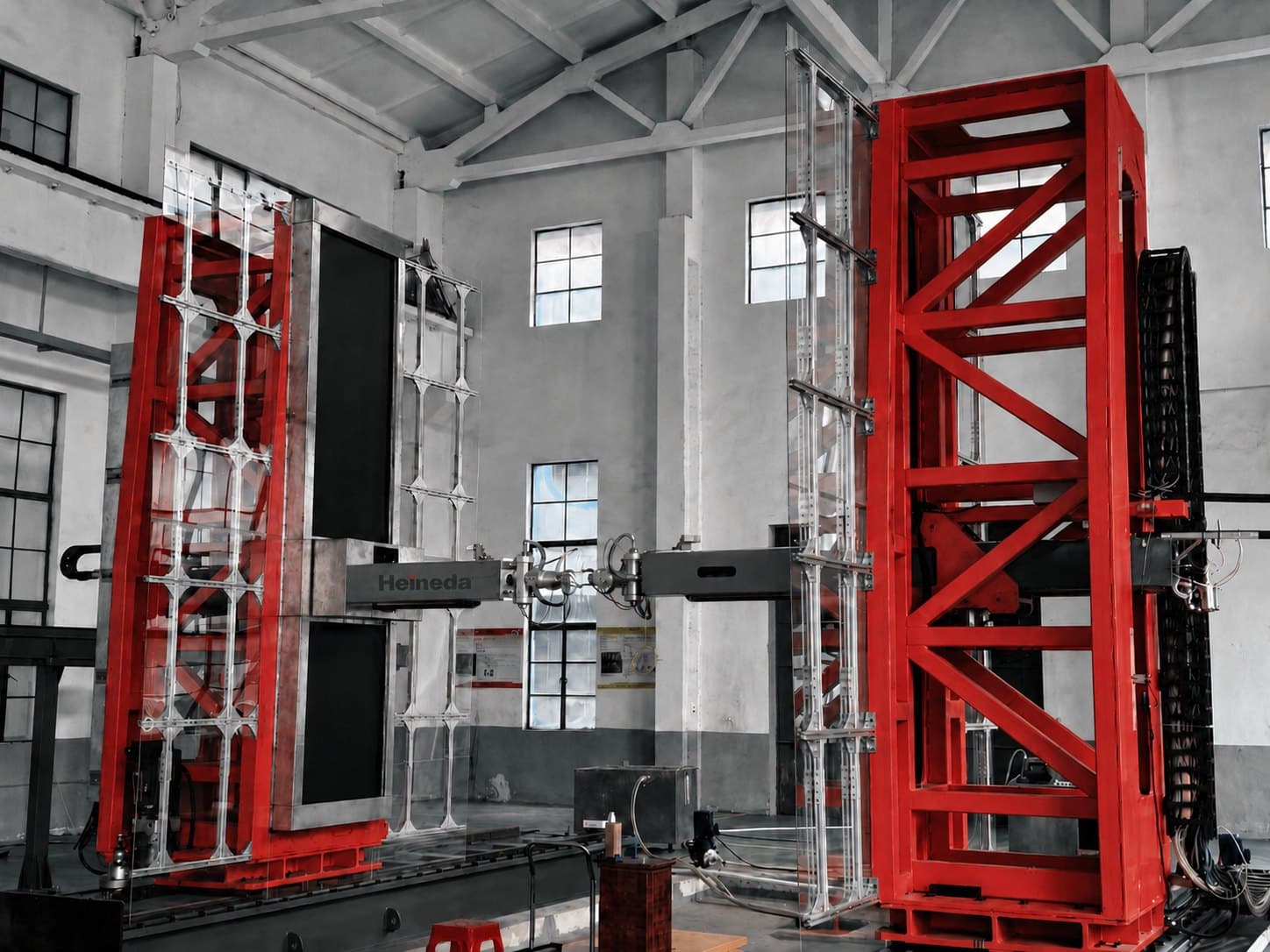
The Heineda round-bar platform targets automated ultrasonic inspection of round bars and rods in demanding production environments. Immersion coupling delivers repeatable scans and reliable flaw detection across a wide range of bar specifications.
Depending on the application, the system can run as a standalone offline cell or integrate with upstream and downstream equipment. Multiple models and mechanical layouts cover different diameters, lengths, loading and unloading methods, and automation levels.
The family suits customers who need inspection stability, automation depth, traceable records, and tailored integration.
Industries & use cases
[02]
Where it fits
Ideal for ultrasonic inspection of metal round bars and similar parts whenever internal quality and process consistency matter.
- Aluminum processing
- Non-ferrous metals
- Metallurgy
- Forging & bar processing
- Precision material preparation
- Automated inspection & sorting lines
Typical parts include round bars and other circular metal sections across diameters, lengths, and process conditions.
Core value
01
Multiple models and layouts address different diameter and length requirements—from large bars to short sticks—without compromising throughput.
02
Immersion ultrasonic coupling improves probe-to-part stability and keeps automated runs consistent from bar to bar.
03
Configure racks, conveying, mechanical handling, auto-tracking, marking, blow-off, data recording, and more to match the workflow.
04
Layouts adapt to part geometry, inspection recipes, floorplans, and hand-off points to upstream or downstream equipment.
Core capabilities
Immersion UT
Immersion ultrasonic inspection
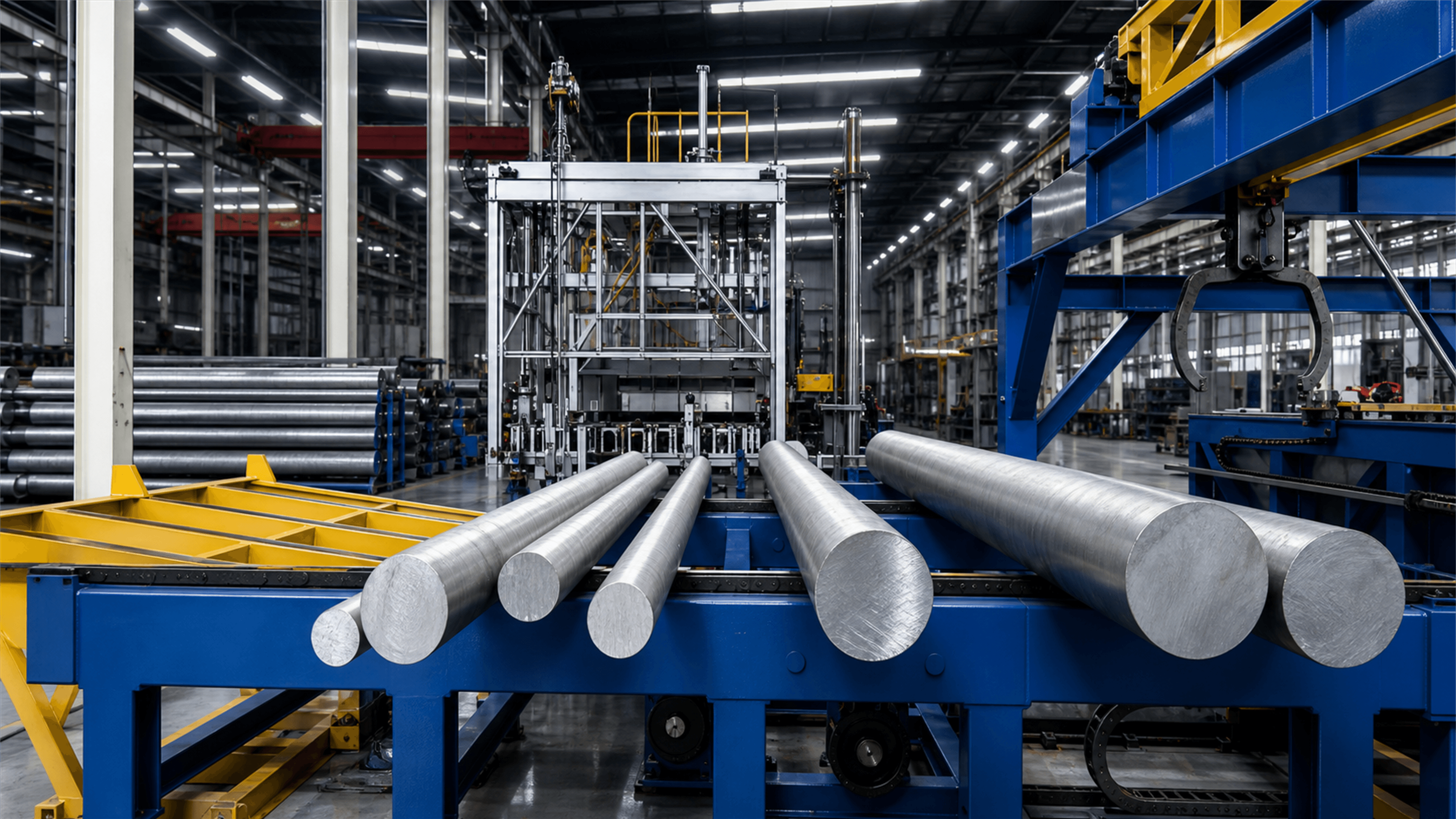
Immersion coupling surrounds the probe and part with a stable medium, keeping test conditions consistent across bar sizes.
System types
Packages we can deliver
01 / 03
Standalone round-bar UT with optional automated loading, conveying, scanning, and reporting—perfect when inspection happens away from the main line.
02 / 03
Interfaces cleanly with saws or other equipment so results feed the next operation and tighten line-wide quality control.
03 / 03
Mixed long/short bars, special dimensions, extra marking, or complex layouts—engineered case-by-case with dedicated configurations.
Different models and mechanical schemes match bar size ranges, cycle times, channel counts, and automation expectations.
System configurations
Models & specs
| Parameter | SUT-310R1A1-800 | SUT-310R1A2-410 | SUT-310R1A-180 | SUT-310ZR1A2-410 | SUT-310DR3A2-260 | SUT-310R1A1-510 | SUT-310R2A1-510 | SUT-310R2A-410 |
|---|---|---|---|---|---|---|---|---|
| Diameter | 300 - 800 mm | 120 - 410 mm | 90 - 180 mm | 100 - 410 mm | 127 - 260 mm | 127 - 510 mm | 100 - 510 mm | 120 - 410 mm |
| Length | 4.2 - 7.2 m | 4.0 - 7.0 m | 4.0 - 7.2 m | 4.0 - 7.2 m / 0.8 - 1.2 m | 0.8 - 1.5 m | 5.0 - 7.0 m | 4.0 - 7.2 m | 6.5 - 7.5 m |
| Channels | 8 CH (L + T wave) | 8 CH (incl. 2 T-wave) | 8 CH (incl. 2 T-wave) | 8 + 8 CH (4 T-wave) | 8 CH (incl. 2 T-wave) | 8 CH (incl. 2 T-wave) | 8 CH (incl. 2 T-wave) | 32 CH |
| Cycle | 3 - 6 min / bar | 2 - 3 min / bar | — | 3 - 5 min / 1 - 2 min | < 1 min / bar | < 5 min / bar | ~2.5 min / 7 m bar | 1 min / bar |
| Miss Rate | 0% | — | — | — | — | — | — | — |
| Feature | — | Unattended, 5 m storage rack | Auto-tracking for bent bars | Dual-mode: long + short independent | Optional hardness / chemistry | Robot arm positioning | Saw + bundler inline, < 0.5 dB repeat. | Seamless saw + bundler integration |
| False Alarm | — | — | < 2% | — | — | — | — | — |
How it runs
Inspection workflow
Step 01 / 05
Loading
Bars enter via manual staging or automated storage and conveying.
Step 02 / 05
Positioning & transfer
Grip, conveyor, or transfer modules move each bar into the test station.
Step 03 / 05
Immersion ultrasonic test
Probes follow the programmed path and channel setup to scan the bar.
Step 04 / 05
Recording & evaluation
Data saves automatically; optional analytics flag and log indications per recipe.
Step 05 / 05
Sorting, marking, or hand-off
Good/reject streams diverge, markers fire, or bars advance to the next process step.
Tailoring capability
[Custom]
Configured around your inspection task
Customer bars differ in diameter, length, surface condition, takt time, and floor layout—so one rigid catalog rarely fits every plant. Heineda aligns mechanics, UT strategy, conveying, and ancillary functions with your parts, standards, and upstream/downstream interfaces for stability, automation depth, and smooth material flow. Offline cells, mixed long/short programs, saw pairing, marking, sorting, and more are all fair game when scoped together.
- Match mechanical layouts to diameter and length envelopes
- Tune inspection modes for long bars, short bars, or mixed batches
- Align conveying, scanning, and load/unload with required cycle times
- Design offline islands or tight couplings to existing lines
- Scale channel counts and UT functions to the acceptance criteria
- Add tracking, data retention, marking, blow-off, sorting, and similar aids
- Interface with saw lines, transfers, packaging, or downstream finishing
- Engineer bespoke integrations and holistic line optimizations
Frequently asked questions
Which parts can the system inspect?
Round bars and similar circular metal sections are the primary focus; exact coverage depends on the selected model and project scope.
Is this a catalog machine or custom equipment?
Both. Proven platform configurations exist, and we routinely tailor mechanics and recipes to customer parts and processes.
Can it link with other production equipment?
Yes. Some builds emphasize standalone use; others integrate tightly with saws or neighboring line equipment.
How many UT channels are supported?
Depending on the model, configurations span from 8 up to 32 channels.
Can inspection data be stored?
Yes. Current specifications include automatic real-time capture plus structured record keeping for later review.
What information do you need before quoting?
Typically diameter, length, alloy or grade, acceptance criteria, target throughput, and a sketch or description of the surrounding line.
Ready to integrate?
Request a custom quote